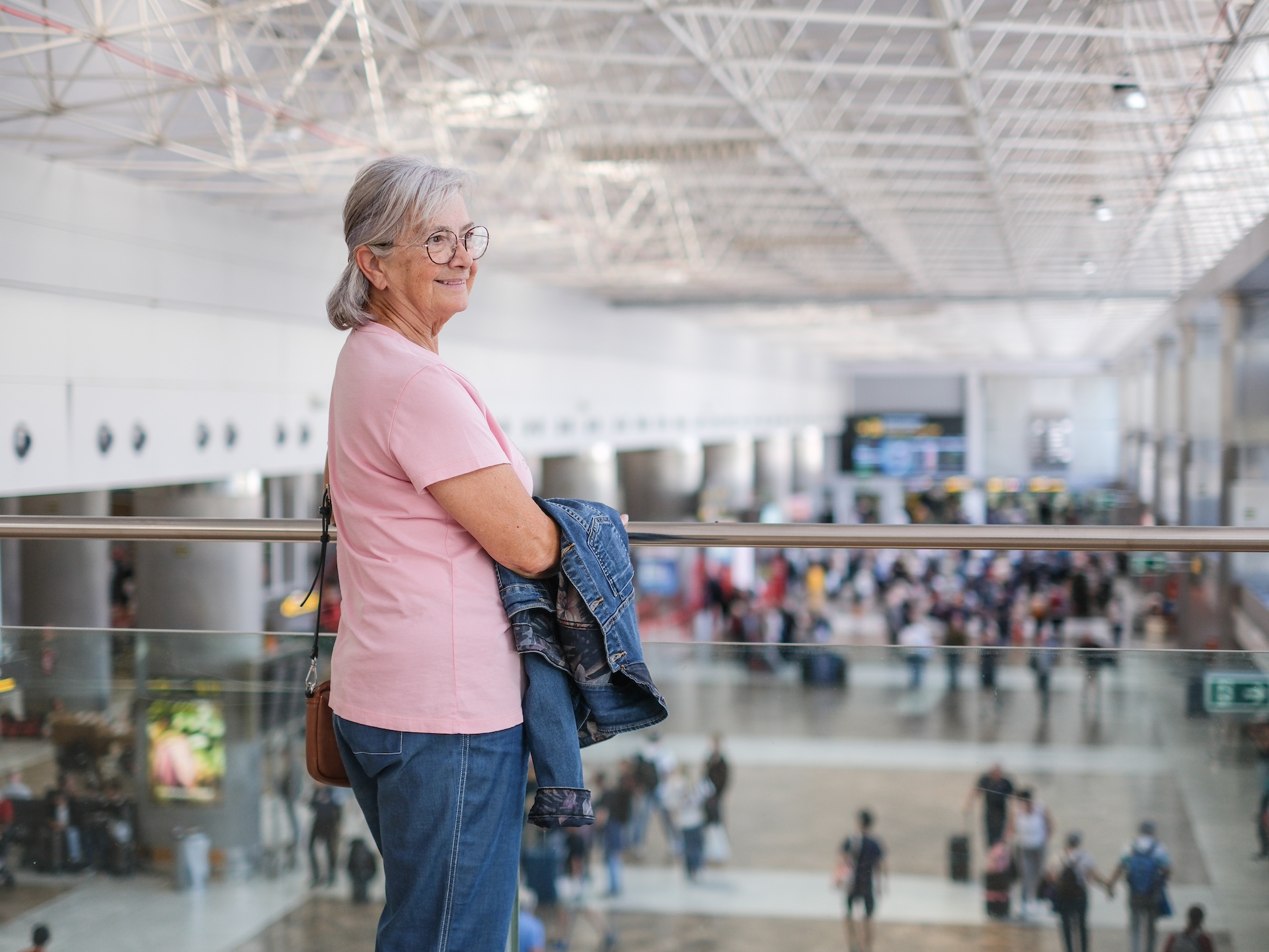



The airport experience usually has a prescribed path:
Check in. Security. Quick gate check. Shopping & Restaurants. Gate again. Board. That ribbon is well-designed and largely fixed. But what happens in the time between those checkpoints, where travelers eat, shop, sit, wander, spend, and wish things were different, is where airports either win or lose.
A major U.S. international airport was ready to invest in improving its concessions, amenities, and layout. They had a clear goal and part of the research structure done to help get there. What they did not have was a partner who could operationalize the qualitative research in the field, across multiple terminals, with real travelers moving through the airport in real time.
The airport was specifically evaluating its food, beverage, and retail concessions, with findings set to directly inform vendor planning, amenity placement, and how the overall layout could better serve the people inside it.
For this airport, that meant understanding what a better experience actually looks like first, from the inside out, with real travelers as the source.
Airport environments are typically fast, fragmented, and always moving, which also means the research design has to be built around the environment, not just dropped into it.
For this project, the field strategy was built around the full complexity of the space: all terminals, pre- and post-security zones, different times of day, and the full range of traveler types moving through. Business flyers cutting through on a tight connection. Families with hours to burn before a long-haul flight. Frequent travelers with strong opinions and first-timers still getting their bearings.
Researchers intercepted travelers as they moved through the airport, capturing behavior in context: where they paused, what pulled them in, and what they passed without a second look.
One of the benefits with Intercepts is that they remove the gap between experience and response. There is no recall bias, no reconstructed memory. For this research, that meant 600 travelers in the middle of their airport experience, answering questions about it in real time.

What those hundreds of travelers shared is now informing what millions more will experience. The findings are shaping real decisions around concessions, retail placement, amenity positioning, and vendor selection across the airport.
The client now has a clear, grounded understanding of what their travelers actually want, where the experience is falling short, and where the biggest opportunities for improvement live, built entirely from real conversations with the people moving through the airport every day.

We bring together research, talent, and intelligent technology to help organizations navigate complexity with confidence