
Through the SIVO, Inc. "Modern Ways of Working" Mini Chat series, we spoke with a strategic consumer insights leader, Anna Estlund, Senior Director of Insights and Strategy at Pernod Ricard.
In this conversation with Natasha Weith, Anna discusses how she is working to the ways her team works to drive impact and efficiency. Examples include building more flexibility into her teams roles, spending more time focused on the front and end stages of projects and hiring on demand talent to extend the bandwidth of her team. All of these things allow Anna and her team to maximize their value and relevance to the organization. Check it out!
https://www.youtube.com/watch?v=yhrIyqHooiM
Special thanks to Anna for generously sharing her experience and knowledge with our peers across the Insights industry!
By Julie Rose
As someone who has spent over three decades in the market research industry, I've seen firsthand how technology reshapes our professional lives. The advent of online surveys, the rise of internet scraping and text analytics, opportunities coming from big data mining, and the now the integration of Artificial Intelligence (AI) all represent significant milestones in the Digital Age intersecting with the Market Research Industry.
AI isn't just a new tool; it's a game-changer. It's capable of automating repetitive tasks, processing and analyzing vast amounts of data, at speeds previously unimaginable. It is an exciting time to once again, adopt new ways of working that will advance our mission to understand people and deliver insights that drive business growth.
New Heights in Market Research Analysis
In today's fast-paced world, the volume of data generated daily is staggering. AI excels at sifting through this data, identifying patterns, and providing preliminary insights. This capability is invaluable in market research analytics, where the first step is often labor intensive to comb through a variety of data sources to identify patterns, anomalies, outliers, consistencies and inconsistencies.
Here are a few examples of where AI analyses can advance market research:
Practical Considerations
AI takes data processing and analysis to new levels, providing speed and pattern recognition that was unheard of even a few years ago. That said, the storytelling aspect of market research - translating data into a clear and inspiring story with actionable insights that will unlock new growth opportunities - is where human expertise shines.
Embracing the Future of AI in Market Research
As AI technology continues to evolve, so will SIVO’s approaches and techniques. We view AI as a powerful augmentation to our workflows and capabilities and will continue to experiment and adopt new ways of working that drive our effectiveness and efficiency. At the same time, we believe that it is the combination of the AI tools and experienced, empathetic market researchers that skillfully identify the nuances of consumers perceptions and behaviors that leads to actionable, strategic insights. We will continue to invest in both resources – artificial intelligence and human intelligence.
Join us on this exciting journey
At SIVO, we are committed to blending the best of human expertise and AI innovation to deliver insights that drive your business forward. Contact us at Contact@SIVOInsights.com or visit SIVOInsights.com to schedule a discovery call and explore how we can help you take your market research to new heights!
By Kerry Juhl
Our job as Insights Professionals is to not only identify relevant and unique consumer insights but also to apply the information in a way that influences decisions and drives action, resulting in growth. But ensuring that valuable insights are heard, internalized, and acted upon can be a challenge. Personal opinions, competing priorities or lack of focus can muffle the voice of the consumer, and the insights professionals that are trying to share it.
So how do you ensure that the insights you uncover will land with impact and be an enabler for growth?
SIVO has an answer… Growth Frameworks. Along with great storytelling, visually interesting media, and activation workshops, SIVO employs Growth Frameworks to organize insights into an inspiring construct, offering teams easily digestible, business-relevant content and common language for client teams to rally around, so they can clearly see and prioritize a path to growth.
What is a Growth Framework?
A growth framework starts with a deep examination of consumers within a market or occasion, to identify relevant insights. Those insights are then organized into a framework that reveals all possible avenues or opportunities for growth. The opportunities within the framework offer a “where to play” roadmap for teams, allowing them to prioritize opportunities and define their strategy for growth.
Examples of Growth Frameworks
Consumer Jobs/Demand Space Map – Consumer Jobs Maps (a.k.a. Demand Space Maps) help explain why consumers make the choices they make. Consumers use products that help them achieve their goals and meet their needs. In other words, products do “jobs” for consumers. If your product does not effectively do the job, consumers are unlikely to hire it. A Jobs Map becomes a framework to help identify ‘where to play’ and it lives beyond a single initiative. It maps all the jobs that consumers have for a particular occasion. For example, a Snacking Jobs to be Done (JTBD) Map includes all the jobs that consumers have for the snacking occasion. A Financial Investment JTBD Map includes all the jobs that customers have for investing their money. It lives on in your organization as a place to continually go back to for inspiration and focus for innovation, renovation, communication, and brand building efforts.

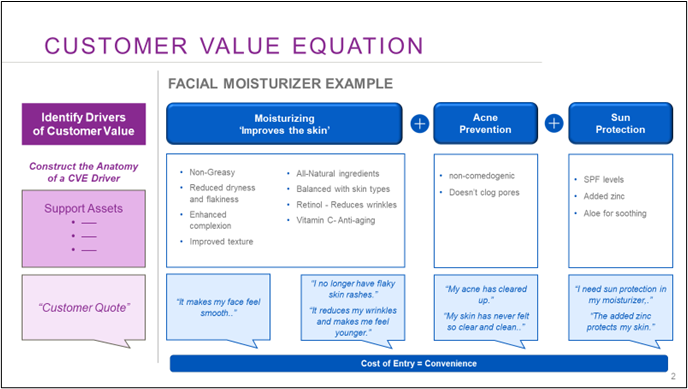
Category Vision Framework – A category vision framework envisions the category of the future. Although no one can predict the future, SIVO, in collaboration with the client team, develops a vision for what the future state of the category will be 3 to 5 years from now. This involves segmenting the existing and new products within a category based on the primary benefit that the products are providing to consumers. Specific attention is focused on new or emerging product lines within the category, and emerging consumer and market trends that may impact the category to identify “signals” for what the future category may look like.
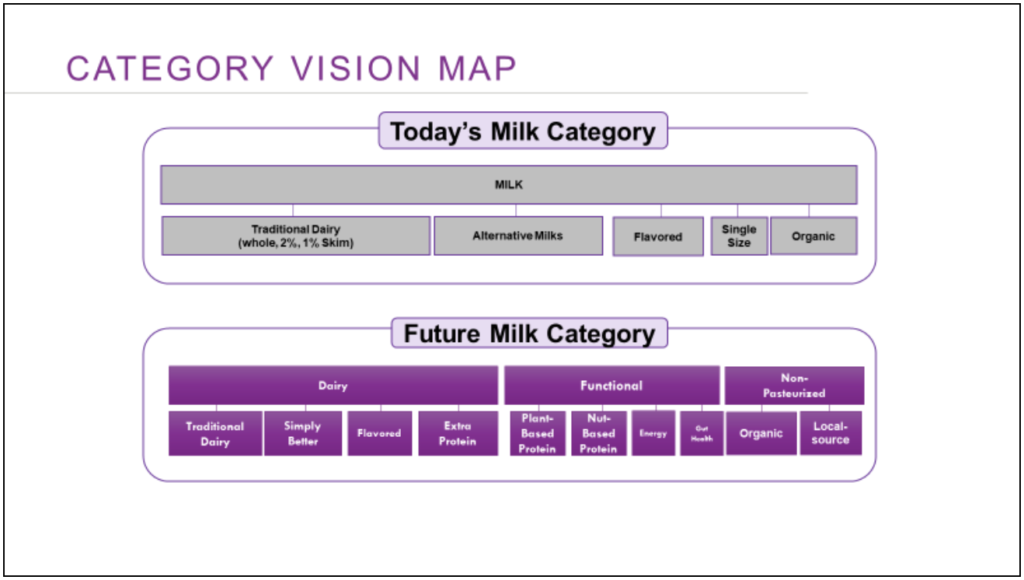
Customer Value Equation – A Customer Value Equation framework provides an understanding of what your customers value about your total brand experience by mapping the key drivers of value and the assets that support those drivers. This framework can guide team decisions on where to invest their next $1 to drive more consumer value or where to cut the next $1 in spending on product attributes that customers do not value. Knowing what drives customer value differentiates and enables companies to stay competitive.
Competitive SWOT – A SWOT (Strengths, Weaknesses, Opportunities, and Threats) framework is a strategic planning tool used by organizations to assess and analyze their current situation and help formulate future strategies. Oftentimes, a SWOT analysis is conducted in reaction to marketplace dynamics, or to proactively prepare for marketplace activities that could happen in the future. For instance, if a competitor acquires a third player in the category or conversely, goes out of business, organizations can develop a SWOT framework to better understand this new reality, and build strategies to respond in a future-focused way.

Benefits of a Growth Framework
Reach out to SIVO to learn more about Growth Frameworks
SIVO wants to help you and your organization elevate your insights into a growth framework that gives you consumer-centric focus, clarity of purpose and galvanizes your team to put you on the path to growth.
Reach out to the SIVO team at Contact@SIVOInsights.com to discuss the growth framework that will be the right strategic fit for your team and your business.
Through the SIVO, Inc. “Modern Ways of Working” Mini Chat series, we spoke with a strategic consumer insights leader, Helen Kurtz, Chief Marketing Officer. In this conversation with Marilyn Weiss, Helen discusses her experience with SIVO’s On Demand Talent solution. She has hired SIVO’s fractional Insights talent in two different companies that she has led, with the intention of introducing consumer insights to the organization, working with the marketing team to prove out the value of insights. Watch this insightful video or read through the transcript below!
https://www.youtube.com/watch?v=JDTSN-vB8jA
Video Transcript:
DOING MORE WITH FEWER PEOPLE:
I mean, for sure, budgets are getting squeezed and I think it's more and more the case that headcount is getting squeezed and there's a desire to do more with fewer people and to be really smart about what choices we're making on staffing.
BRING IT IN AND PROVE IT OUT:
I left General Mills and went to a sort of billion dollar company, Foster Farms and it was clear to me as I came in as CMO that we needed to absolutely elevate our sort of consumer touch points and I needed to get that consumer insight function established at the company but I didn't have the headcount to do that and so that's where I reached out to you Marilyn and we dreamed up this idea of this fractional support.
I left the company, I'm now CMO at another company, and very quickly brought Sevo in with me again for the same reason. It wasn't a function that was established in the company, again about a billion dollars in revenue. And so it was a real opportunity to bring in and prove out the capabilities of consumer insights at the same time knowing I was going to get a fantastic, no questions asked, I was going to get the best talent at the right time.
CONCENTRATED EFFORT & TEAM INTEGRATION:
I think what you're getting with this fractional talent, because SIVO is the best at weeding it out. You guys are the experts themselves. It's like you’re going to a great college. You've already been filtered through. You're picking out the best talent.
I think there's also a little bit of a mindset of a fractional talent that's really important that who we've brought in doesn't need to be pitching in front of the C -suite.
They can, but they don't need that recognition. They they're not gunning for promotions within. They're really just there to do a job. They integrate really well with my team. But again, there I can have them sort of play in the background or bring them to the forefront. It's just a much lower lift for me and my team. I would say they're really there to do the job. And in many cases to educate my team on what consumer insights excellence looks like because that was not a function that was in either of the two companies.
So I guess, again, to be more succinct, this combination of excellence and expertise in their field, as well as this ability to work very seamlessly with the team and again, not being in it to win it for promotions. They're really there to do the job. So it's just sort of very concentrated effort.
CONSUMER-CENTRIC THOUGHT LEADERSHIP:
I think it's just thought leadership first and foremost. I think most companies are, if not there already, are wising up to consumer-first and consumer-led and that's sort of like in their DNA. So if you have a declaration like that happening in your company, it's like well, what do I do with that? and who helps me execute that? So I think you know both of the individuals I've worked with have really brought that to the fore helping educate on what that looks like. How to get close to the consumer, driving education, training, and facilitating.
Again, it's not just like executing the research, but interrogating:
THE ECONOMICS ARE FANTASTIC:
Like just the economics have been really fantastic. I didn't hire a full -time person. I use a fractional person at 30 hours a week. So like, that's worked out really well. I have no turnover because this person is here and they're very committed to us. I don't have to worry about them leaving. I've got a great backup from SIVO in that, you know, the resources are there. The thought leadership is there behind my individual. I know that she consults with SIVO on questions that are beyond her scope.
Then, just this sort of seamlessness of having someone who works well with a team. You filter out for people who are really exceptional at what they do and are used to an experience with working on a team. When you're out there interviewing, you don't really know what you're gonna get. So it's just like, it's almost like a stamp of approval, I think, coming from SIVO. I have found that through and through.
TALENT CURATION & INSIGHTS EXPERTISE:
I think the biggest compliment to SIVO is that my team doesn't really know about SIVO. Like they just know Jill. They know the person with whom they work. I am the behind the scenes working with SIVO and I've found that to be extraordinarily easy. I think that the team at SIVO like really listens to what I need. When I start a project or when I moved companies, they were quick to sort of like curate who would be a good match. They get to know me as a client and what my demands are.
My team would say it's a godsend. I think my team loves in both places, loves working with this talent, and would sacrifice a lot of other things before they would give up this talent, which happily we didn't have to do.
Across industries, brands attempt to access and leverage data to unlock stronger sales and business growth. Your team can bring a wealth of experience and expertise to initiatives, but getting feedback from the people who engage with the product produces better outcomes. Below, we’ll answer the questions: what are consumer insights? Why are consumer insights important? And What is the best way to get consumer insights for my business?
First thing’s first, what are consumer insights? Consumer insights are the underlying motivations or needs that make a consumer behave a certain way. Insights professionals work to understand consumer attitudes, requirements, desires and behaviors to uncover insights that can then guide brand building, portfolio and marketing communications efforts. Many organizations gather data from their consumers, but the real depth of insight comes in asking the right questions and getting the full picture from consumers. Insights gleaned from studying and connecting with your consumers can inform nearly every aspect of your business’ path to growth.
So, how do you get consumer insights? Businesses can get consumer insights in several ways. The correct method for your team depends largely the business question, as well as the industry and market you serve. For example, organizations may capture qualitative data via focus groups, in-depth interviews, and user immersions to identify the nuances in consumer values and opinions.
Meanwhile, quantitative data like path-to-purchase, product testing, and volumetric forecasting can help teams validate consumer interest and behaviors and build confidence in decision-making and actions. Consumer insights experts can gather this information in a number of ways. See some of the most effective consumer insight solutions and techniques below:
Qualitative Consumer Insights
Ethnographies
In-Depth Interviews
Focus Groups
Shopalongs
Shopper Intercepts
Mobile Missions
Online Bulletin Boards
Fishbowls
Agile Sprints
Rapid Refinement
Communication Checks
User Immersions
In-Home Usage
Interactive User Experience
Jobs to Be Done
Quantitative Consumer Insights
Segmentation
Attitude and Usage
Path-to-Purchase
Tracking Testing / Screening
Brand Positioning
Brand Architecture
Product Testing
Creative Testing
Opinion Polling
Now that we know what they are, why are consumer insights important? Essentially, consumer insights remove some of the speculation from your business decisions and actions. It provides actionable answers to what consumers think about your brand, your category, and your products or services. Once you receive those insights, you can take it and run. It’s the fuel that ignites new product or service innovation and optimization, brand experiences and communications. At a higher level, it gives your business access to an entirely new perspective within your consumer market. Consumer insights give you a more holistic understanding of the consumer target audience you want to connect with, allowing you to gain a competitive edge within your industry.
So, why is consumer insight important? There are several reasons growing brands invest in these solutions to drive growth and gain a competitive edge. See why more and more businesses focus on obtaining consumer insights for their strategies below:
The best business strategies have data-backed insights behind them. Consumer insights allow you to identify a “why” to inform and support your business initiatives. The same goes for your brand.
Understanding what people truly believe about your brand can transform marketing strategies. Today, it is important to know who your customers are, what they do, what they value, and why it matters. The best way to answer those questions is to identify your consumers and start a dialogue to better understand them. This dialogue and the insights that come from it allows your business to bring more value to the people you serve. It all leads to better customer experiences and a stronger return on investment.

Every product or service has areas for improvement. Who are the best people to provide that feedback? The individuals who purchase and use them. Getting honest opinions on your current portfolio helps you identify the best places for optimization. You can spot holes in the market and create solutions that fill consumers' unmet needs. Some of the best product ideas and business innovation can come straight from your customers.
It all starts with empathy. Providing enhanced, consumer-focused products and services can only benefit brand loyalty. Brands need to continuously check in with their customers to ensure they have positive brand experiences and identify new ways to delight them. As mentioned above, your products/services can consistently improve to meet the needs of your customer base. Ultimately, this all works toward a stronger relationship with your audience to gain ongoing loyalty. That goes a long way when they are choosing between brands.
How can consumer insights fuel your marketing campaign? Speaking directly to your target audience members creates more nuance and specificity in your consumer-first marketing campaigns. Every engagement in your advertising and beyond should prioritize your consumer. Understanding their values and preferences deeply allows you to speak to them more directly and effectively. If you’re on the journey of building your brand or audience-based marketing (AMB) strategy, these insights provide a path toward successful campaigns that move the needle and influence consumer behavior.

What is your customer’s experience with your brand? Are there features that they like or dislike? Sometimes small things go unseen by marketers, but small details can leave a lasting impression on consumers. Whether it’s digital user journeys, messaging, or customer service conversations, it’s invaluable to hear, understand and react to what people think when they engage with your brand, products, and representatives.
If your organization is wondering how to get consumer insights, the best path is through a specialized consumer insights company. SIVO is a global insights and strategy firm specializing in understanding people and their needs and beliefs that drive behavior. We partner with brands to answer key questions that guide strategies and fuel growth. First, we schedule a discovery meeting, where we ask your stakeholders and subject matter experts key questions about your business and needs. Then, we design a custom research approach that aligns with those requirements. From the data gathered, we identify key insights that inform your decisions and drive business growth. Our experts act as your ongoing partner, helping you access your consumers and interpret the research every step of the way.
Ready to get meaningful consumer insights to unlock your next business and brand strategy? SIVO provides full-service custom consumer research and experiences for business across industries. Whether you need consumer insights, organizational intelligence, market and competitive intelligence, or on-demand talent, we empower organizations to get the most of their business, marketing, and brand building efforts to better achieve their goals. Contact SIVO today to get started.
SIVO Insights brings together research, talent, and intelligent technology to help organizations navigate complexity with confidence. Have a business challenge? Let's talk!
We bring together research, talent, and intelligent technology to help organizations navigate complexity with confidence