
by Kerry Juhl
Consumer Personas are a great tool for bringing your consumer target to life for your organization, to inspire growth ideas, new brand experiences and product innovation. It is a representation of your target segment based on a combination of quantitative and qualitative data. It summarizes your consumers’ lifestyle, values, needs, challenges, and preferences, so that it can be easily shared and digested across the organization.
At a high level, here is SIVO’s guide on how to build consumer personas:
Building your Consumer Personas
Key information that should be considered when building consumer personas includes:
Check out these other SIVO blogs on consumer targets and consumer segmentation, to better understand the inputs and context for consumer personas.
Making Consumer Personas Interesting
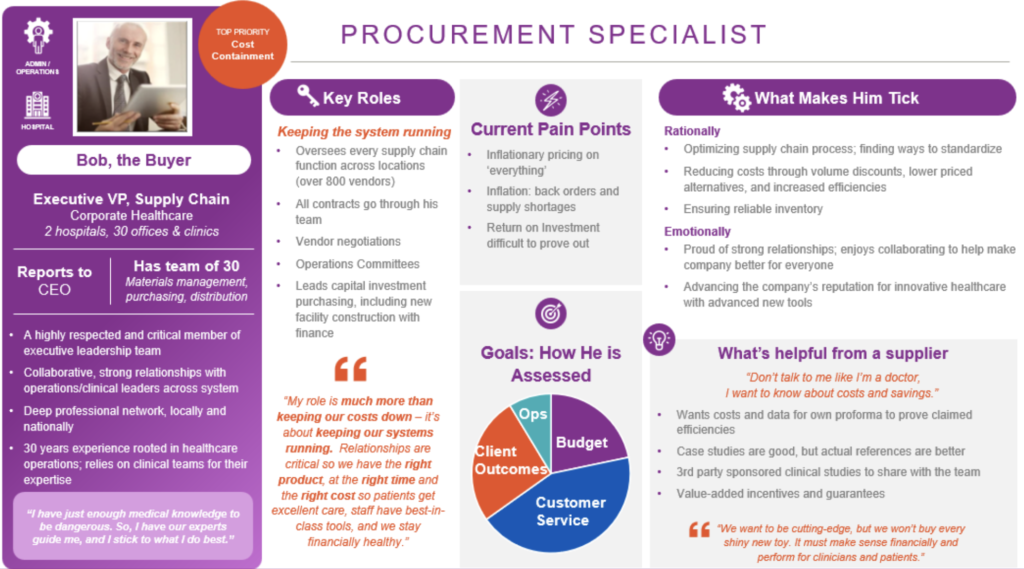
The goal is to bring the consumer to life in an interesting and inspirational way. This information needs to be interesting and easy to read so that it gets internalized by the organization. Here are a few tips:
Keep it Brief: A good persona should be 1 to 3 pages in length. Ideally, there would be a 1-page summary and if needed, 1 to 2 follow-up pages with actionable details and insights.
Use Visuals: A persona should be visually interesting. Use photos, graphics, or infographics to bring the consumer persona to life and make them feel more tangible and relatable to your team.
Use Narratives and Quotes: Storytelling is an important part of building your persona. Use the data to create a short 1-paragraph narrative that describes the consumer persona – who they are, what they need, and their underlying motivations.
Include a Key Consumer Insight: It is important to include a one-sentence insight that describes the underlying motivation that would make them potentially interested in buying your product or service.
With the data summarized and visualized into clear and succinct personas, it is easy to understand and empathize with your consumer target, i.e., the segment of consumers that will inspire your growth ideas, marketing communications, promotions, distribution plans and new product innovation. Your team can now tailor brand messaging, content, and product offerings to align with the needs and preferences of key consumer targets. It is also easy to socialize the learning across the organization and agency partners in an efficient and effective way.
Maintaining Relevance of Consumer Personas
Consumer personas are foundational marketing and insights deliverables that will inspire your teams’ growth ideas and guide your agency partners for years. For this reason, you need to invest in ongoing maintenance to ensure continued relevance to your organization. Depending on the volatility and competitive dynamics within your market, you will want to:
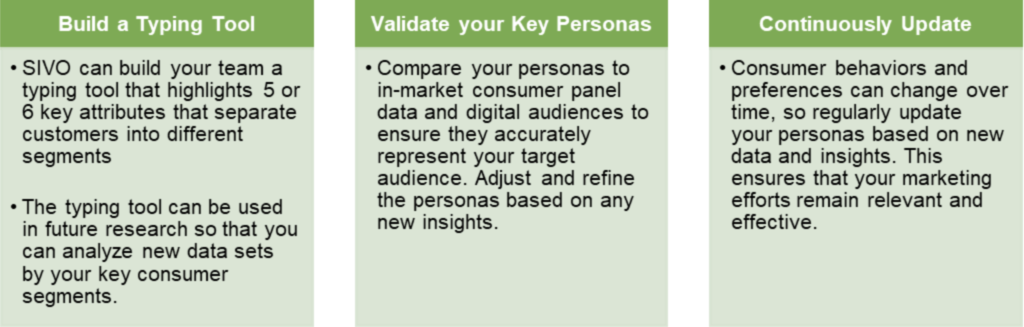
The success of your consumer persona profiles depends on the quality of your research, the depth of your understanding and getting it to land within your organization and with agency partners. Regularly leveraging the personas while also iterating and improving upon them will help you stay in tune with your consumers and maintain a competitive advantage in the market.
Your Source for Expert Customer Insights
At SIVO Inc., we are dedicated to helping our clients understand their consumer targets by designing and executing consumer segmentations, following up with qualitative research and building consumer personas. We can then facilitate activation sessions with your team to develop action plans and strategies that leverage these insights.
Reach out to us at Contact@SIVOInsights.com or go to SIVOInsights.com today to schedule a discovery call and connect!
The great resignation took a major toll on businesses across industries in the last few years. Businesses that prided themselves in workplace culture, flexibility, and benefits saw long-time employees step down from their roles. At the same time, more and more companies face transformative restructuring, like acquisitions and mergers. Following such major changes in the world at large and within organizations, the opinions and beliefs held by workers changed tremendously, and even the most forward-thinking businesses have suffered the consequences.
With that, many businesses are looking for a path toward improving performance and commitment in the workplace. How can they avoid employee attrition in the future? How can they improve their processes to boost efficiency and support employees? How can they redirect leadership to provide the support those employees need? At the end of the day, organizational intelligence gets data-driven insights to answer all these questions, and much more.
First thing’s first, what is organizational behavior? Organizational behavior is how individuals interact and behave in groups. It’s especially relevant when looking at the workplace. Forward-thinking businesses take their organizational behavior seriously, because it greatly impacts employee satisfaction and engagement, leadership performance, and overall workplace efficiency and effectiveness. If organizations do not understand their employee behavior, perceptions and opinions, they miss out on insights that could holistically improve their business. The best way to get those opinions, and translate them into a strategic action plan is to leverage organizational intelligence solutions.
Who should gather organizational behavior data? Your team is full of subject matter experts on your business and your industry, but when it comes to gathering information on organizational behavior, they may not be the right facilitators. Internal teams will have natural bias and may have subconscious results in mind, and could therefore not ask appropriate, unbiased questions. Plus, when it comes to listening to your employees, you want to get thoughts from a wide range of team members. That means allocating the task to an outside expert, to increase cooperation by maintaining employee confidentiality. Ultimately, this gives every employee the opportunity to provide their opinions, maintaining employee anonymity while removing all potential bias from the initiative.

So, what are the keys to improving performance and commitment in the workplace? Understanding what motivates your team members is key to educating and empowering leadership to create a path toward a better future for your company. Get a breakdown on employee insights, leadership development, and strategic planning facilitation below:
What are the honest opinions of your employees when it comes to your business culture and processes? When leadership asks them directly, they will likely get a much different answer than an unbiased facilitator. However, there are many ways to gather this information from your team. An organizational intelligence expert can identify a custom learning plan based on your business, and implement solutions designed to get the most valuable feedback from employees. According to the Harvard Business Review,
“High-OQ (organizational intelligence) leaders foster an understanding, or ethos, of “who we are.” When leaders move from managing individuals or small groups to leading entire organizations, they need to create a shared understanding of what’s important and what the organization stands for — in other words, an ethos.”
What kind of exercises result in the best employee insights? This varies depending on the organization, but typically it comes down to both qualitative and quantitative research. Some examples of qualitative research include one-on-one interviews, small group employee discussions, and stakeholder interviews. Meanwhile quantitative research looks more like customized online employee engagement surveys targeted to specific employee teams, departments, functions, and regions. Often, employee engagement surveys are administered with regular frequency, e.g., annually or bi-annually, to measure positive or negative changes in employee satisfaction and engagement over time.
Your industry is constantly changing, your business is growing, and workplace expectations are ever-evolving. Is your leadership adapting to accommodate? Modern businesses must create an expectation for agility in leadership to keep employees engaged and motivated. That means regular leadership training, coaching, and development. Organizational intelligence experts can handle the task and provide tailored, relevant coaching that meets the needs of your leaders. It begins with one-on-one introductory sessions, a 360 degree leadership assessment and follow-up analysis, development planning and coaching sessions with leaders at all levels of the organization - executives, high-potential leaders, and new managers. This results in more effective leadership and impactful business management that can exceed the expectations of their teams.
What solutions are involved in leadership development? First, there is leader coaching and education, which can include leadership assessments, feedback, and career planning directly with leaders. This can take place individually or in group/cohort sessions. There is also team effectiveness training, which helps teams define their purpose, processes, roles and responsibilities, as well as individual contributions. This is especially important for businesses facing restructuring, where new teams are being formed and leadership responsibilities are changing.

You have so many initiatives in the works – strategic planning can feel like one of those tasks that could easily get pushed down the line. However, strategic planning is the high-level exercise that impacts every other element of your organization. Outsourcing guarantees timely and effective execution, especially when you pick the right partner for the job. Market research firms like SIVO offer comprehensive workshops to ensure your team develops a sound strategic plan that will successfully lead the company into the future.
These facilitated workshops are especially beneficial to newer businesses or businesses facing large changes, like acquisitions, mergers or a challenging external environment. Knowing how to bring teams together, leveraging critical and inspirational inputs is no small task. That’s why it’s beneficial to have experienced strategic planning facilitators on your side, to plan and facilitate the workshop so that you leave the session with a clearly defined vision, mission, values, plans and ownership assignments. Sessions may also focus on other topics, such as communications planning, insight activation sessions, special-interest group planning, and even competitive SWOT analysis. Regardless of the focus, each strategic planning session will help leaders develop and align on clear strategies for the future, to drive business success.
No matter the business, every employee wants to be heard. Creating a place for employees to provide their thoughts can only benefit your business. From an employee perspective, these people-focused exercises prove that leadership cares about their opinions and wants to make steps to improve their workplace experience. The same goes for dedicated strategic planning exercises and leadership development. These initiatives create a stronger, people-first organization positioned to succeed. When leaders are effective, employees are motivated, and business strategy is in place, it all adds up to improved performance and commitment in the workplace – and more success in the market.
Organizational intelligence services result in game-changing insights that can transform your business for the better – and position you for even more growth down the line. Your team members have the deep knowledge about the company and industry, and often, their perspectives can unlock opportunities that leadership would have never otherwise considered. Once those insights are relayed to leaders with actionable recommendations, you can accomplish so much more within your organization.
Are you ready to gain insights on your organizational behavior? Get information on every aspect of your organizational behavior with SIVO. Our team of organizational intelligence experts can help you lead your team through any major transition. We work with organizations across industries, and build custom insight solutions that holistically improve performance and commitment in the workplace.
Contact SIVO today to discuss your business needs and get support.
Across industries, brands attempt to access and leverage data to unlock stronger sales and business growth. Your team can bring a wealth of experience and expertise to initiatives, but getting feedback from the people who engage with the product produces better outcomes. Below, we’ll answer the questions: what are consumer insights? Why are consumer insights important? And What is the best way to get consumer insights for my business?
First thing’s first, what are consumer insights? Consumer insights are the underlying motivations or needs that make a consumer behave a certain way. Insights professionals work to understand consumer attitudes, requirements, desires and behaviors to uncover insights that can then guide brand building, portfolio and marketing communications efforts. Many organizations gather data from their consumers, but the real depth of insight comes in asking the right questions and getting the full picture from consumers. Insights gleaned from studying and connecting with your consumers can inform nearly every aspect of your business’ path to growth.
So, how do you get consumer insights? Businesses can get consumer insights in several ways. The correct method for your team depends largely the business question, as well as the industry and market you serve. For example, organizations may capture qualitative data via focus groups, in-depth interviews, and user immersions to identify the nuances in consumer values and opinions.
Meanwhile, quantitative data like path-to-purchase, product testing, and volumetric forecasting can help teams validate consumer interest and behaviors and build confidence in decision-making and actions. Consumer insights experts can gather this information in a number of ways. See some of the most effective consumer insight solutions and techniques below:
Qualitative Consumer Insights
Ethnographies
In-Depth Interviews
Focus Groups
Shopalongs
Shopper Intercepts
Mobile Missions
Online Bulletin Boards
Fishbowls
Agile Sprints
Rapid Refinement
Communication Checks
User Immersions
In-Home Usage
Interactive User Experience
Jobs to Be Done
Quantitative Consumer Insights
Segmentation
Attitude and Usage
Path-to-Purchase
Tracking Testing / Screening
Brand Positioning
Brand Architecture
Product Testing
Creative Testing
Opinion Polling
Now that we know what they are, why are consumer insights important? Essentially, consumer insights remove some of the speculation from your business decisions and actions. It provides actionable answers to what consumers think about your brand, your category, and your products or services. Once you receive those insights, you can take it and run. It’s the fuel that ignites new product or service innovation and optimization, brand experiences and communications. At a higher level, it gives your business access to an entirely new perspective within your consumer market. Consumer insights give you a more holistic understanding of the consumer target audience you want to connect with, allowing you to gain a competitive edge within your industry.
So, why is consumer insight important? There are several reasons growing brands invest in these solutions to drive growth and gain a competitive edge. See why more and more businesses focus on obtaining consumer insights for their strategies below:
The best business strategies have data-backed insights behind them. Consumer insights allow you to identify a “why” to inform and support your business initiatives. The same goes for your brand.
Understanding what people truly believe about your brand can transform marketing strategies. Today, it is important to know who your customers are, what they do, what they value, and why it matters. The best way to answer those questions is to identify your consumers and start a dialogue to better understand them. This dialogue and the insights that come from it allows your business to bring more value to the people you serve. It all leads to better customer experiences and a stronger return on investment.

Every product or service has areas for improvement. Who are the best people to provide that feedback? The individuals who purchase and use them. Getting honest opinions on your current portfolio helps you identify the best places for optimization. You can spot holes in the market and create solutions that fill consumers' unmet needs. Some of the best product ideas and business innovation can come straight from your customers.
It all starts with empathy. Providing enhanced, consumer-focused products and services can only benefit brand loyalty. Brands need to continuously check in with their customers to ensure they have positive brand experiences and identify new ways to delight them. As mentioned above, your products/services can consistently improve to meet the needs of your customer base. Ultimately, this all works toward a stronger relationship with your audience to gain ongoing loyalty. That goes a long way when they are choosing between brands.
How can consumer insights fuel your marketing campaign? Speaking directly to your target audience members creates more nuance and specificity in your consumer-first marketing campaigns. Every engagement in your advertising and beyond should prioritize your consumer. Understanding their values and preferences deeply allows you to speak to them more directly and effectively. If you’re on the journey of building your brand or audience-based marketing (AMB) strategy, these insights provide a path toward successful campaigns that move the needle and influence consumer behavior.

What is your customer’s experience with your brand? Are there features that they like or dislike? Sometimes small things go unseen by marketers, but small details can leave a lasting impression on consumers. Whether it’s digital user journeys, messaging, or customer service conversations, it’s invaluable to hear, understand and react to what people think when they engage with your brand, products, and representatives.
If your organization is wondering how to get consumer insights, the best path is through a specialized consumer insights company. SIVO is a global insights and strategy firm specializing in understanding people and their needs and beliefs that drive behavior. We partner with brands to answer key questions that guide strategies and fuel growth. First, we schedule a discovery meeting, where we ask your stakeholders and subject matter experts key questions about your business and needs. Then, we design a custom research approach that aligns with those requirements. From the data gathered, we identify key insights that inform your decisions and drive business growth. Our experts act as your ongoing partner, helping you access your consumers and interpret the research every step of the way.
Ready to get meaningful consumer insights to unlock your next business and brand strategy? SIVO provides full-service custom consumer research and experiences for business across industries. Whether you need consumer insights, organizational intelligence, market and competitive intelligence, or on-demand talent, we empower organizations to get the most of their business, marketing, and brand building efforts to better achieve their goals. Contact SIVO today to get started.
What is a Consumer Target
At the foundation of all great marketing initiatives is a complete and deep understanding of the consumer target. The consumer target is a specific and detailed description of the type of person who has needs or desires that you believe can be served or helped with your products or services. Truly identifying and understanding the consumer target can inspire creative and innovative thinking to help grow your brand through new products, marketing campaigns, or promotions that fulfill their needs and wants.
Segmenting the Market to Identify Your Consumer Target
Teams must be focused and clear about who their consumer target is and is not. This consumer does not represent everyone that purchases your product or service.
A typical first step to identifying your consumer target is to segment the market you operate in. Market or consumer segmentation is a market research approach that allows you to divide the universe of potential consumers into smaller groups or segments based on their characteristics. The segments are composed of consumers who will respond similarly to marketing strategies because they have shared demographics, needs, interests, values and/or locations. Once the market has been segmented, an assessment is required to understand which segment of consumers offer the most potential for growth, i.e., which group is most likely to find value and be motivated by your business proposition and respond to your initiatives, across the 4Ps of product, placement, pricing, and promotion.
Building Knowledge About Your Consumer Target
While segmentation is a great first step in identifying your consumer target, it is only the beginning. Every day you will be faced with making business decisions based on what you know about your consumer target and how you think they will respond to your actions. You should have basic knowledge covering five key areas:
Answering these questions requires a combination of sales data analyses, quantitative assessments such as, attitude and usage studies plus, qualitative, or observational techniques such as, in-depth interviews, in-store shop-alongs, and in-home ethnographic research to fully immerse in how your consumer target thinks, lives and shops. Oftentimes, this is referred to as developing the consumer target persona.
Building Consumer Empathy
The ultimate goal is to build empathy for and intuition about your consumer target. You need knowledge to understand what is in their head (how they think) and empathy to understand what is in their hearts (how they feel and their underlying motivations). Most of the time, you yourself are not the target consumers so you must spend time with them to truly understand their lives, values, beliefs, and behaviors. The goal should be to move through the following spectrum to be able to genuinely empathize with your consumer target.
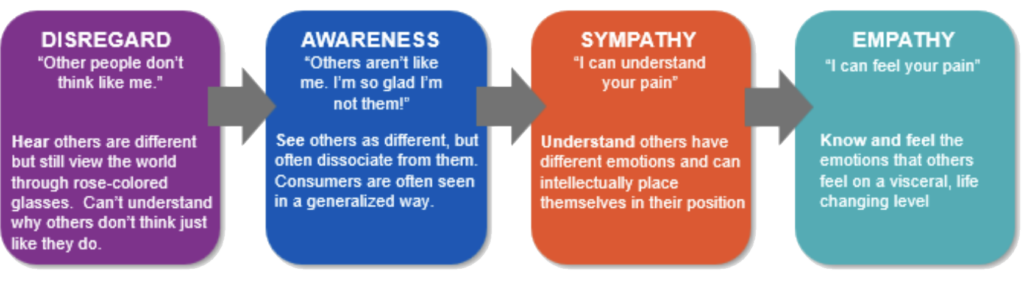
How to Get to Empathy for Your Consumer Target
Building empathy is different from conducting a typical market research study. Market research is designed to answer specific business questions by getting feedback and perspective from consumers. For instance, you might conduct market research to understand how your product compares to the competition or what product varieties you should launch next.
An empathy trek is solely designed to gain better understanding of who your consumer target is. It is a listening and observation exercise, designed to help you “walk in their shoes” and “feel what they feel.” In an empathy trek, you’ll explore how your consumer target lives, what they value, believe and how they behave. By building consumer empathy, you will build your intuition about them, and are able to make business decisions on their behalf.
The Value of Truly Knowing Your Consumer Target
The value of building empathy for your consumer target is tremendous. Specifically, it can:
Your Source for Expert Consumer Insights
As you and your team learn more about your consumer, your marketing and innovation ideas will get more targeted at serving their needs, which will in turn, make them more successful. Ideally, you will be able to reach them at key moments of truth, physically or digitally with personalized content that improves the brand experience and loyalty.
At SIVO, we are dedicated to helping our clients identify and understand their consumer target’s perceptions, needs, beliefs, and behaviors. We create learning plans that will help you gain valuable insights by applying the right approaches to identify your market segments, consumer target persona and to build consumer empathy for you and your team.
Contact us via our website form or email us at Contact@SIVOInsights.com today to schedule a discovery call!
by Cindy Blackstock
Being part of a custom market research firm with global clients, we are often a go-to partner on international research—both qualitative and quantitative. And while all global market research has some challenges, global qualitative research has some unique ones.
From years of designing consumer research approaches, we’ve identified a list of questions we ask our clients to customize research for their needs. But whether you are researching with SIVO, another supplier, or leading research internally for your own organization; here are 5 watchouts when planning global, qualitative research. These apply for both in-person and virtual approaches.

Everything takes longer than domestic-only market research. Most global market research consists of multiple countries and languages. This requires added time to translate all materials such as recruitment screeners, discussion guides, and transcripts. For example, domestically you may receive a recruiting update every 1-2 days. But with the additional time needed to translate the recruiting progress, your updates may occur every 3 days with non-English speaking countries. And with transcripts needing translation time too, that delays the analysis and delivery of your final report.
SIVO Tip! When planning your research, build in extra time to account for translation needs on both the front and back ends of your research. This could easily add an additional 2-weeks to a simple qualitative design such as webcam focus groups.

Expect cultural differences in business norms. Corporate cultures differ around the world. When working with partners and consumers in other countries you need to expect, respect, and allow for cultural differences. One basic example of this is with interview start-times. As an example, our Thailand local moderator and consumers were consistently in-place and talking well before the official interview start time (making our client feel like they were late to observe the conversation); whereas in Brazil we had many consumers (and even a local moderator for one interview) who joined late.
SIVO tip! As a client who may be inviting other co-workers or organizational leaders to attend your research, prepare your team that some behaviors—from professionals and consumers—will be different. You can even remind your team these differences are likely one of the key reasons why you are conducting global research. Embrace it!

Know in advance if you want to adapt stimulus in real time. Particularly when researching marketing messages or communication, a client may learn from a few consumers and want to adapt the stimulus. This could be as simple as learning a word or phrase translated in your stim might be academically correct but needs to be modified to a more culturally relevant word – or it could be re-writing paragraphs of copy. In either example, you need a translator readily available to adjust the stimulus before the next interview.
SIVO Tip! Decide in advance if you will want or need to adjust your stimulus in real time. And if yes, identify the tactical steps and talent needed to achieve this.

Transcribe every word of the interview. Sometimes for efficiency (budget and time), a translator may only transcribe parts of the interview directly relevant to the brand, product and / or research objectives. But there is a lot of rich learning in the commentary! For example, consumer references to local politics can provide valuable context to their reactions to your product solution or marketing messages.
SIVO Tip! Confirm in advance that your translator understands your expectation that all words will be translated. And if efficiency is a concern, you can always limit the translation to only the ‘best’ interviews. This can condense your timeline and save costs.

Consider a collective discussion with all moderators and translators. If fielding research in multiple countries and/or markets to inform a global strategy (not a market specific plan); consider scheduling a collective debrief will all moderators and translators. This allows for discussion on what learning is consistent vs. the differentiated needs by country.
SIVO Tip! Such a discussion impacts your project timeline and costs and should be included as an expectation at the start of your project. A good research partner should be able to flex and add this to the close of your project but be aware of the implications to time and budget.
These 5 watchouts when planning global, qualitative research (in conjunction with a qualified and experienced Consumer Insights agency partner) will help ensure that you have a successful project resulting in global consumer insights to inform your business decisions.
To discuss these tips and any other questions about international or domestic consumer research, please feel free to contact the SIVO team at Contact@SIVOInsights.com for a consultation call.
SIVO Insights brings together research, talent, and intelligent technology to help organizations navigate complexity with confidence. Have a business challenge? Let's talk!
We bring together research, talent, and intelligent technology to help organizations navigate complexity with confidence