Most “ideation sessions” start in the wrong place.
A marketer or insights associate is told, “We need new ideas... can you run a brainstorm session?” A room is booked, a stack of Post‑its appears, or someone fires off a quick AI prompt: “Give me 50 new product ideas.” The output is usually the same: lots of activity, very little innovation, and no traction.
The ideas are “meh” and not fundamentally new. They don’t feel unique nor anchored in real consumer pain points or the realities of the business. They’re hard to advance with leadership or retail partners.
At SIVO, we see the same pattern across companies: teams are ideating before they’ve earned the right to ideate.
In speaking to our newest SIVO team member, Jon Overlie, who specializes in getting brand teams to great ideas, he says,
“Breakthrough ideas are not the starting point, they’re the result of work that happens earlier: aligning on project expectations, assessing consumers’ needs and pain points, and then making sense of what you’ve learned together. Only then have you earned the right to ideate.”
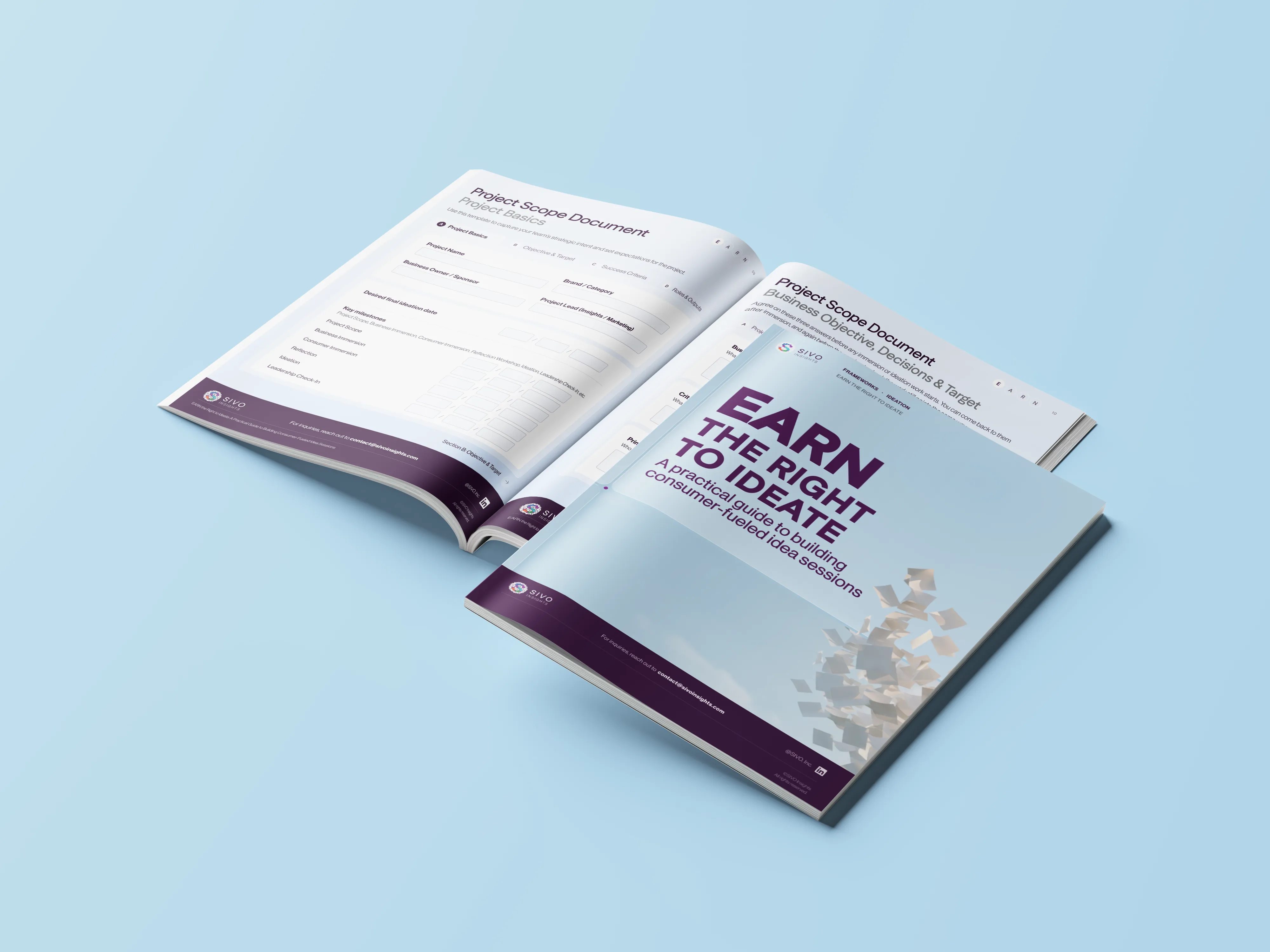
That’s why Jon and the SIVO team are sharing the EARN Framework with our clients. It is a practical approach to building and facilitating consumer‑fueled idea sessions instead of meh brainstorms.
EARN has four stages:
In this article, we introduce the EARN Framework and share a “Practical Guide to Building Consumer‑Fueled Idea Sessions” so you have a DIY toolkit for support at every stage, should you choose to run the process on your own.
The first step is to set team expectations for what you want to accomplish and how to accomplish it.
Most weak ideation sessions start with fuzzy intent. People walk in with different definitions of success, different consumers in mind, and no shared problem statement. The session becomes a catch‑all for every gripe, wish and idea in the organization.
In the Expectations stage, you slow down tospeed up:
When teams see this captured in one place, ideation stops being a vague “idea grab bag” and becomes focused problem‑solving in service of a business and consumer need.
In the Practical Guide, this stage is supported by simple prompts and a project scoping template you can use to get everyone on the same page before you ever schedule an ideation.
With the project scope in place, it is time to assess the behaviors, motivations, and pain points of your target consumers, and the performance of your business, to build team understanding and identify moments or occasions in consumers’ lives that your brand can support.
You can’t create consumer‑fueled ideas if you haven’t actually spent time with your consumers or fully understand the dynamics surrounding your business.
In the Assess stage, you expose the team to both:
Along with a comprehensive business review, the consumer/customer immersion can take different forms depending on your risk and budget:
The goal is to move beyond abstract “targets” and into real, lived consumer or customer stories that everyone in the room has seen or heard.
In the Practical Guide, this stage is supported by an immersion “menu” that helps you choose appropriate ways to assess customer and business input at low, medium, and high levels of investment.
Next, it’s time to reflect on what you hear from consumers and converge on key consumer problems / job territories.
Even when teams invest in good immersion, they often jump straight from “we showed some videos” into “now let’s brainstorm.” That jump skips the most important cognitive step: making meaning together.
In the Reflect stage, you:
Each prioritized territory becomes a “field of play” for later ideation: a specific consumer or customer, in a specific situation, with a specific job and tension, and a clear picture of what success would look and feel like if you solved it.
In the Practical Guide, this stage is supported by a reflection worksheet and a simple job territory card template you can use in to move from scattered observations to 2–5 clear, inspiring consumerjob territories.
Now you have earned the right to ideate, getting to new ideas for products, services, improvements, and customer promotions, depending on project scope.
Only after you’ve set expectations, assessed consumer and business reality, and reflected to identify job territories are you truly readyfor New Ideas.
In this stage, you:
Because the work of E, A, and R has been done, getting to New Ideas becomes sharper, faster, and more productive. Also, new ideas are easier to evaluate against consumer jobs, business realities, and the decision you set out to make.
In the Practical Guide, this stage is supported by a ready‑to‑use workshop agenda example and a short readiness checklist to confirm you’ve truly “earned” the right to ideate before you bring everyone into the room.
The EARN Framework is intentionally practical. Depending on resources, teams can run parts, or even all of it themselves:
Either way, the goal is the same: to move from “meh brainstorms” to consumer‑fueled idea sessions that your organization can believe in and act on.
To make this concrete, we’ve created the Earn the Right to Ideate Practical Guide, a set of simple tools that support you a teach stage of EARN, from aligning expectations to running a half‑day ideation session.
You can use the guide to lead your own earned‑ideation process, or partner with SIVO to co‑design and facilitate it with you on your next brand renovation, innovation pipeline, or consumer promotion.
If you’d like to explore how EARN could apply to a specific project, we’d be glad to connect. Comment below, send us a LinkedIn Message or contact us via SIVOInsights.com.
In the always-evolving landscape of consumer behavior, understanding the perceptions around how people feel about your brand, the reasons why they choose it and the context for how they use it can unlock future growth opportunities. For instance:
A proven consumer research methodology that stands out for gaining this type of foundational learning is the Attitude and Usage (A&U) study.
What is an Attitude and Usage study?
You can think of an Attitude and Usage study as delving deeply into the “who, what, where, why, when” of your brand and category. More specifically, this is a comprehensive research approach that often combines qualitative and quantitative techniques to uncover perceptions, preferences, motivations, and usage patterns of your (and your competitors’) consumer base. Because of the breadth it covers, the data collected, and insights gained become a foundational reference for Insights, R&D, and Marketing teams for many months or years afterward.
Attitude and Usage studies answer Key Objectives about:
Category Users: This involves understanding the basic demographic details of the users in your category (age, gender, income, etc.) alongside psychographic factors like values, beliefs, and lifestyle choices.
Consumer attitudes: You can fully understand consumer perceptions about the category, your brand, competitors, and the overall market. This helps you explain your market share, by gauging your brand’s “share of mind.” It reveals how your brand stacks up in consumers’ minds on important factors such as product quality, customer service, and other unique benefits, relative to the competition.
Usage Patterns: You can examine how consumers interact with your product or service, including frequency of use, when and where it is used, purchase motivations and delights/pain points. This context reveals insights that inspire ideas to improve the usage experience.
Trend Analysis: Although an A&U research study analyzes products or services at a point in time, it can be re-fielded at regular intervals so you can track changes in consumer attitudes and behaviors over time, to identify market shifts or emerging trends in the category. This is particularly useful in dynamic categories where there are always new competitors entering the market.
Benefits of an A&U for the Marketing and R&D Teams
Focused efforts on the “purchase funnel”: You will discover the percentage of your consumer target that is aware, has tried, is a repeat purchaser or is already loyal to your brand. Understanding this, relative to your competition, will help marketers decide where and how to spend their marketing support budget to drive sales effectively and efficiently.
Innovation and renovation ideas: Insights from A&U studies can fuel product improvements, innovations, and new launches that resonate with consumer desires, address usage pain points, and deliver on unmet needs.
Create a Competitive Advantage: Knowing where your products and services stand in comparison to the competition allows you to capitalize on your strengths and unique benefits by emphasizing via packaging claims and marketing messages. Identifying and addressing any shortcomings allows the team to close critical gaps that may be keeping you from gaining market share.
Long-Term Growth: Ongoing A&U research, in waves at regular intervals (depending on the level of activity in your industry or category) provides a pulse on evolving consumer and competitive trends, ensuring that your team can stay agile and responsive to changing market dynamics. This helps to foster and maintain growth over time.
Onboarding new employees: A bonus to having a comprehensive picture of the market dynamics and how your brand performs within the market is that it provides a great basis for onboarding new employees into your organization. It also paints a picture to get all employees aligned on growth strategies that are rooted in foundational market and consumer insights.
Your Partner for Actionable Consumer Insights
At SIVO, Inc., we are dedicated to helping our clients develop and utilize Attitude and Usage research to gain actionable insights that drive strategic decision-making and foster meaningful connections with consumers. By investing in A&U research, you and your team can navigate the complexities of the market with confidence and clarity, ultimately paving the way for long-term growth.
For more DIY approaches, check out SIVO’s On Demand Talent Profiles to learn more about how an experienced, fractional Consumer Insights Generalist can be also an asset for your A&U research needs.
Contact us via our website form or email us at Contact@SIVOInsights.com today to schedule a discovery call!
By Marilyn Weiss
In the evolving landscape of market research, methods that leverage technology are continually being developed to gain deeper insights into consumer behavior. Mobile Missions are a straightforward approach that has proven successful for SIVO clients. This approach allows researchers to tap into consumers' real-life experiences in a natural and engaging way, collecting meaningful data in the form of open-ended responses, photos and video footage.
Understanding Mobile Missions
Mobile Mission research is an immersive approach that leverages mobile technology to engage participants on their own schedule and in their natural environments. This involves prompting consumers to complete a series of activities and questions via their mobile devices, capturing their experiences, thoughts, and behaviors in real-time.
Benefits of Mobile Missions
Mobile Missions offer several advantages over traditional research techniques:
Real-Time Interaction: Participants receive prompts and tasks on their mobile devices, allowing them to respond in real-time as they shop, prepare, or use products.
Natural Environment: The method captures consumer behavior in real-life settings, such as their homes or local stores, ensuring more genuine participation and deeper insights.
Engagement and Comfort: Participants can complete tasks at their own pace, allowing them time to reflect and encouraging more thoughtful and honest responses.
Remote Observation: Researchers can observe and interact with participants remotely, making it easier to conduct research in environments where in-person observation might be challenging or restricted.
Applications for Mobile Missions
Mobile Missions are versatile and can be utilized to achieve various research objectives. Five common applications that we see at SIVO include:
1. Shopper Insights
2. Customer Journey Mapping
3. Brand and Promotion Engagement
4. Behavioral Insights
5. Competitive Analysis
By utilizing Mobile Missions across these diverse areas, companies can gain a holistic understanding of their consumers and their products, leading to more informed decisions and tailored strategies that resonate with their target audience.
Executional Details
The execution of Mobile Missions typically involves the following specifications:
Your Partner for Progressive Solutions and Actionable Insights
At SIVO, Inc., we are on a constant quest to identify innovative solutions that lead to meaningful insights for our clients. We have had great success in utilizing Mobile Mission technology to capture consumer perceptions and behaviors in a natural and engaging manner to achieve your learning objectives.
Contact us via our website form or email us at Contact@SIVOInsights.com to schedule a discovery call to discuss your business and market research needs.
By Julie Rose
As your fiscal year is coming to a close, new questions and challenges can arise as you finalize spending on this year’s budget:
SIVO Insights On Demand Talent™ Can Help
SIVO’s On Demand Talent is a great solution for Insights Professionals and Teams facing the year-end crunch – with more initiatives than bandwidth to get it all done. We leverage our extensive pool of fractional Insights Talent, with years of experience and expertise, to help you achieve your business objectives.
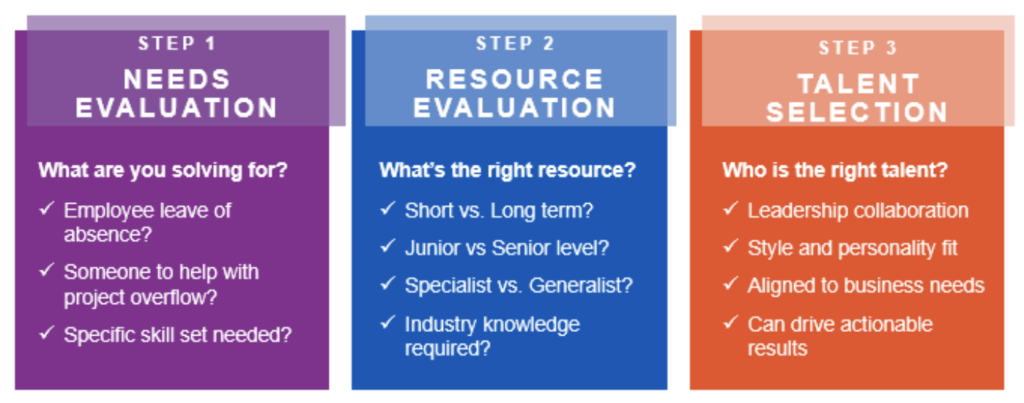
We recommend three key steps for evaluating and making the case internally for hiring contract Insights talent.
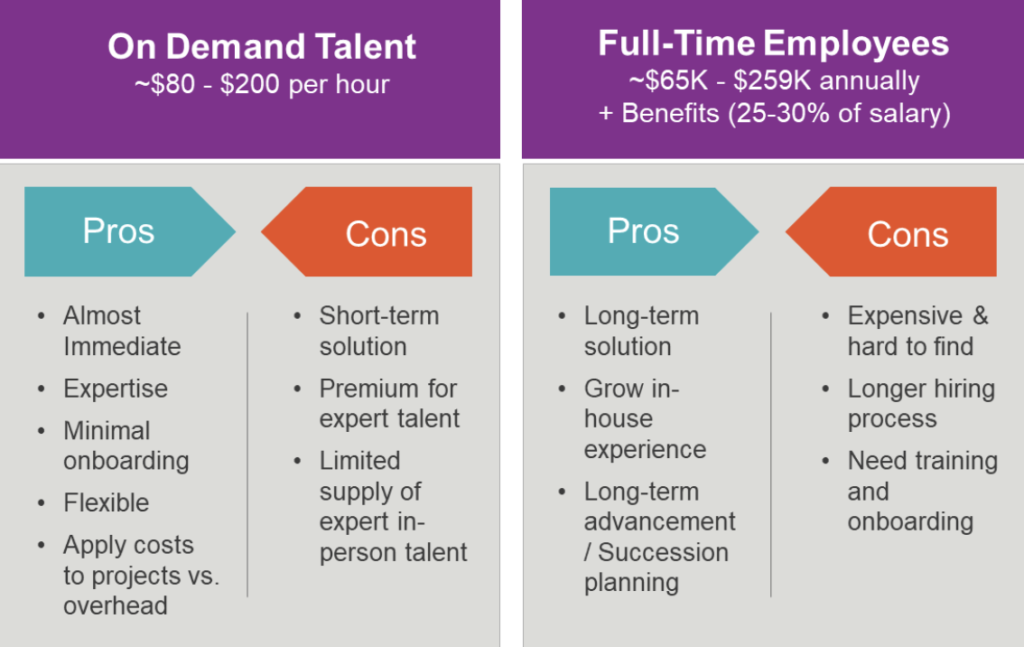
As workforce talent continues to evolve, there is no shortage of options, including interns, short or long-term contractors, contract-to-hire, or direct hire. Below, we highlight the advantages of On Demand Contract Talent vs. a Full-Time Hire:
Prove the Need for Incremental Resources
Some of our clients have struggled to make the case to their leaders for permanent incremental headcount. Instead, they started with SIVO’s On Demand Talent to show value to the business. This step helped them demonstrate the benefit of having additional resources. Let SIVO help you get the additional headcount you need in 2024.
Get Expert Consumer Insights with SIVO
We have started ODT engagements in as fast as one week. To discuss your needs and how we can match the talent with the best expertise for quick solutions in your organization, visit SIVO On Demand Talent or email Contact@SIVOInsights.com.
In the world of Insights, it’s vital to align your research projects with business priorities. The SIVO Insights Forum recently hosted author of the book, “More than Just Interesting: How to Build an Insights Function for Impact” and former Ulta Beauty VP of Consumer Insights, Elizabeth Oates, who shared these questions to consider.
1 - How do my potential projects drive the priorities of the business?
2 - Which projects are going to drive future success for the business?
3 - Are there any projects that serve multiple business partners?
https://youtu.be/PZs4uAkRH1I
Tune into a lively on-demand conversation “Bridging The Gap: Translating Insights Into Meaningful Business Results" to hear from Elizabeth and other Insights experts including Eliana Wahnon (General Mills, VP of Consumer & Market Insights) and Khary Campbell (Comcast, VP of Consumer Research & Insights).
Learn from Insights leaders as they discuss:
Thank you to Natasha Weith, VP of Research at SIVO Inc. for hosting The SIVO Insights Forum!
SIVO Insights brings together research, talent, and intelligent technology to help organizations navigate complexity with confidence. Have a business challenge? Let's talk!
We bring together research, talent, and intelligent technology to help organizations navigate complexity with confidence