
by Julie Rose
Did somebody say recession? Unfortunately, recessions are a normal part of the business cycle. There are periods of economic growth and periods of economic slowdown. During a recession, the economy slows, companies struggle with sales, people lose their jobs, and the stock market suffers. The point where the economy officially falls into a recession depends on multiple factors, but many experts indicate that two consecutive quarters of decline in Gross Domestic Product (GDP) is a sign of recession. The recession in 2020 occurred when the pandemic impacted our economy. The Great Recession in 2008 was caused by the collapse of the housing market. We are seeing signs for the next recession too, with some experts predicting late 2022 or early 2023. According to the Washington Post, the economy contracted in the first three months of 2022, by shrinking at a 1.4 percent pace.
Source: https://www.washingtonpost.com/business/2022/05/19/recession-economy-markets/
One common result of recession is that unemployment rises. Companies sometimes employ “hiring freezes” to maintain profits, while they wait for the economy to stabilize. This puts stress on the rest of the workforce so companies must look for ways to protect their current employees from burnout while also ensuring the most critical work gets done.
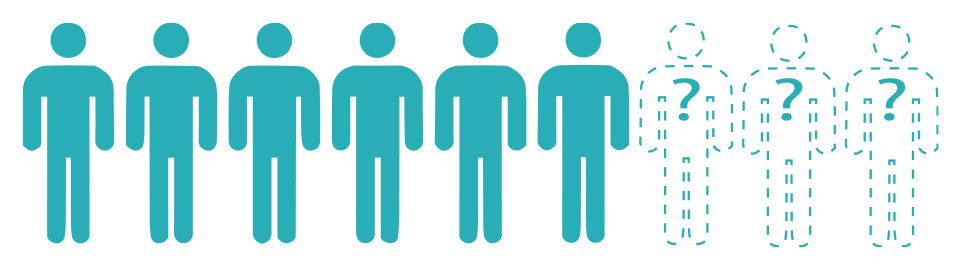
It’s common for businesses today to look for creative ways to expand their bandwidth to continue to achieve short and long-term goals. For companies that don’t want to make the long-term commitment of hiring full-time employees or are trying to conserve budgets, hiring temporary or “on demand” professionals is a low-risk, cost-effective option.
Recession-Proof Insights Talent from SIVO On Demand Talent
SIVO On Demand Talent can help with skilled Consumer Insight and Market Research Professionals that ease your team’s workload and help you achieve your business goals while also relieving you of the financial risk that is common during a recession.

We offer flexible solutions, like short or long-term assignments for fill-in roles or finite projects. Additionally, we can serve as an extension of your internal Consumer Insights Team, what we like to call your “back-pocket” consultants. For some clients, our talent serves as the virtual CI team, supporting initiatives in a cost-effective way while also ensuring high quality insights.
SIVO On Demand Talent offers far more flexibility than full-time employee expansion. Plus, you don’t have to spend your valuable time searching for, hiring, and training talent. We take care of it all for you, freeing you from the burden of a lengthy process.
Let SIVO help you manage through the ‘hiring freeze” by temporarily meeting your Insights, Analytics or Market Research talent needs.
Reach out to ondemandtalent@sivoinsights.com for a consultation.
By Marilyn Weiss
In the evolving landscape of market research, methods that leverage technology are continually being developed to gain deeper insights into consumer behavior. Mobile Missions are a straightforward approach that has proven successful for SIVO clients. This approach allows researchers to tap into consumers' real-life experiences in a natural and engaging way, collecting meaningful data in the form of open-ended responses, photos and video footage.
Understanding Mobile Missions
Mobile Mission research is an immersive approach that leverages mobile technology to engage participants on their own schedule and in their natural environments. This involves prompting consumers to complete a series of activities and questions via their mobile devices, capturing their experiences, thoughts, and behaviors in real-time.
Benefits of Mobile Missions
Mobile Missions offer several advantages over traditional research techniques:
Real-Time Interaction: Participants receive prompts and tasks on their mobile devices, allowing them to respond in real-time as they shop, prepare, or use products.
Natural Environment: The method captures consumer behavior in real-life settings, such as their homes or local stores, ensuring more genuine participation and deeper insights.
Engagement and Comfort: Participants can complete tasks at their own pace, allowing them time to reflect and encouraging more thoughtful and honest responses.
Remote Observation: Researchers can observe and interact with participants remotely, making it easier to conduct research in environments where in-person observation might be challenging or restricted.
Applications for Mobile Missions
Mobile Missions are versatile and can be utilized to achieve various research objectives. Five common applications that we see at SIVO include:
1. Shopper Insights
2. Customer Journey Mapping
3. Brand and Promotion Engagement
4. Behavioral Insights
5. Competitive Analysis
By utilizing Mobile Missions across these diverse areas, companies can gain a holistic understanding of their consumers and their products, leading to more informed decisions and tailored strategies that resonate with their target audience.
Executional Details
The execution of Mobile Missions typically involves the following specifications:
Your Partner for Progressive Solutions and Actionable Insights
At SIVO, Inc., we are on a constant quest to identify innovative solutions that lead to meaningful insights for our clients. We have had great success in utilizing Mobile Mission technology to capture consumer perceptions and behaviors in a natural and engaging manner to achieve your learning objectives.
Contact us via our website form or email us at Contact@SIVOInsights.com to schedule a discovery call to discuss your business and market research needs.
In today’s fast-paced world of AI-powered dashboards, real-time metrics, and instant feedback loops, businesses are flooded with data. But despite this access to information, many teams are still struggling to truly understand their consumers.
Why? Because understanding doesn’t come from data points alone. It comes from empathy – the ability to see the world through your consumers’ eyes.
Empathy is not just a soft skill. In a business context, empathy for your consumer is a strategic asset. And when used intentionally, it becomes a competitive differentiator that can unlock sharper decisions, faster innovation, and stronger brand resonance.
Empathy in a business context goes beyond surface understanding: It’s the process of cognitively and emotionally connecting with your consumers’ experiences, motivations, and needs.
Consumer empathy allows teams to:
And most importantly: it allows your team to move beyond assumptions and act with confidence.
What we see most notably, with the rise of AI, more and more executive teams are pushing for faster, leaner decision-making. But without a connection to real-world consumer behavior, speed risks becoming shallow, and very costly. From an insights perspective, developing empathy within organizations and training teams isn’t a nice-to-have or a luxury – it’s a necessity.
And these are just some examples. Empathy fuels smarter decisions at every level of the business, in all departments.
Whether you’re a CMO rethinking brand positioning or an Insights Director building your learning plans, here are some key tools to bring empathy into strategy:
Spending time in your consumers’ real environments (their homes, their workplace, neighborhood stores, their daily routines, even in their cars) allows you to uncover insights that would never surface in a focus group or controlled environment. Watch for routines, artifacts, interactions, and decision-making moments. What feels normal to them might be revealing for your team.
Ethnographic interviews are perfect to use when exploring new segments, refining product strategy, or understanding how a category fits into everyday life.
Understanding how people actually make choices at shelf (or online) tells you more than any survey can. What stops them? What persuades them? How do they navigate the retail space? How does your product show up relative to your competitors? Shop-Alongs and Path to Purchase Observations are perfect when optimizing in-store experience, packaging, or online conversion strategy.
These immersive, multi-day learning experiences are designed to help teams step into the shoes of their consumers – literally. Whether it’s joining farmers on their land or shadowing a parent on a morning routine, empathy treks bring brand teams (and senior leaders) closer to the emotional context that drives decisions. It’s a common tool to aligning cross-functional teams, inspiring innovation, or uncovering core brand truths.
Mobile mission software, accessed through smart phones, gives you visibility into your consumers’ world in real time or over time. From what they eat and wear to how they talk about brands, these tools capture lived experiences in context, without disrupting them. Digital diaries are perfect for when businesses are looking to understand rituals, routines, and the evolving emotional process of the consumer journey.
Empathy doesn’t end with the research. In fact, it’s only the beginning, and companies should strive to embed it in their day-to-day businesses. But how? That’s where tools like Insight Activation Sessions come in, to help teams translate empathy into action by reframing findings as strategic questions, idea starters, or business moves. A perfect move to embedding insights into planning cycles or cross-functional decision-making, for long-term results.
At SIVO, we love helping clients across industries uncover powerful insights through empathy-driven methods. Here are just a few examples of past cases:
A leading electronics retailer struggled to connect with their consumers – their messaging felt clinical and cold. By stepping into the real lives of their target market, in their own homes, we uncovered the emotional language that truly resonated. The result? Clear direction on positioning and communication strategies – and a renewed path to success in a challenging category.
A global beverage brand was losing relevance across key consumption occasions. Through immersive virtual ethnography, we helped them see how emotions, rituals, and motivations shaped beverage choice across six countries. This empathy-powered understanding led to sharper messaging and inspired marketing activation across core segments.
An electronics brand expanding globally needed to understand what truly drives consumer decisions – but sales data alone weren’t cutting it. Through ethnographic interviews and in-store observations across multiple countries, we uncovered key journey moments that shaped how and why people buy. The insights directly informed their brand growth strategy.
A recreational vehicle company wanted to identify new opportunities for innovation and product improvement efforts – but needed to understand the deeper feelings associated with their utility vehicles. The SIVO and client team spent quality time with farmers and hunters on their properties, riding in their vehicles to see and feel how these vehicles integrated into their consumers’ lives, their farming businesses, and leisure time.
Empathy isn't just a buzzword or about "feeling good" – it's about making better decisions, for you, your company, and your consumers. When you understand the world your consumers live in, you can make decisions with more clarity, alignment, and confidence.
Ready to move from unaware to empathetic?
Let’s explore how empathy can drive better decisions across your company!
By Ashton Walz
What is Consumer Segmentation
Market or consumer segmentation is a market research approach that allows you to divide a brand’s universe of potential consumers into smaller groups or segments based on their characteristics, e.g., demographics, values, attitudes, behaviors, and geography. The segments are composed of consumers who have similar characteristics within a segment and differing characteristics from all other segments.
Once the consumer population within the market has been segmented, teams can assess and compare segments to understand which segments offer the most potential for growth, i.e., which group is most likely to find value and be motivated by your products or services and respond to your marketing, promotion, and innovation initiatives.
Creating Your Segmentation
When developing your segmentation, the idea is to create segments that feature members who are as similar as possible to each other but different as possible from members in other segments. To do this, brand teams work with SIVO to define the parameters that will be used to segment the market, i.e., behaviors, attitudes, psychographics, or demographics, location, etc. For instance, if you wanted to segment the breakfast food category, you might want to include demographics (e.g., presence of kids in the household), behaviors (e.g., whether breakfast is eaten in the home or out of home) and attitudes (e.g, level of commitment to healthy eating habits) to help define your segments.
Once a plan is in place, a survey will be developed, and data will be collected from consumers in your defined market. Survey respondents will be presented with a scale to rate the importance of a series of behavioral and attitudinal statements or participate in a trade-off exercise to choose one of four statements that is most important or best describes them.
With the data collected, segments are created using clustering analysis. The ideal number of segments for a typical market is 5 to 8. More than 8 segments can be overwhelming to manage and fewer than 5 may lump too many consumers together.
Once the segments are developed, SIVO Consumer Insights experts will develop detailed profiles or personas, using all the survey data to describe or tell a story about each segment. The profiles/personas highlight the unique attributes and behaviors of the segments for easy comparisons.
Applications for Consumer Segmentation
When analyzing the consumer segmentation, it is important to understand the best ways to use this valuable marketing research tool.
Targeted Marketing Campaigns
The first primary use is to develop targeted marketing campaigns. By understanding the unique needs, interests, and demographics of each segment, business teams can alter their marketing messages and promotional activities to resonate with specific segments to increase consumer engagement. When marketing communications have been written with a specific consumer segment in mind, consumers feel understood and are more motivated to make a purchase.
Optimized Distribution in Stores and Channels
Understanding the consumer segmentation within a market also helps businesses optimize their distribution and sales channels. Different consumer segments may have varying preferences for different store banners or channels. They might also have different preferences for online shopping, physical stores, or a combination of both. By identifying these preferences and behaviors, companies can allocate resources strategically, focus on the most effective stores and channels, and provide a seamless shopping experience for each segment.
Identify Market Gaps
Another significant use of consumer segmentation is to help identify market gaps where there are a lack of products or services that are currently meeting the needs of specific segments. Gaps in the market can then be translated into opportunities to develop new products or modify existing ones to cater to the needs of specific segments. This strategy enables companies to stay ahead of competitors, enhance consumer satisfaction, and build stronger brand loyalty.
Identify Additional/Secondary Markets
Consumer segmentation allows businesses to identify untapped market opportunities and potential areas for expansion. By analyzing the demographics, behaviors, and preferences of different segments, companies can uncover secondary or adjacent target segments that also align with their products or services. This knowledge enables strategic decision-making and facilitates successful market penetration.
Your Source for Expert Consumer Insights
At SIVO, Inc., we are dedicated to helping our clients develop and utilize consumer segmentation that reveals their consumer target. We design custom learning plans that will help you understand which segment of consumers hold the most potential for growth and then facilitate the development of action plans so you can connect with and serve your consumer target.
Contact us via our website form or email us at Contact@SIVOInsights.com today to schedule a discovery call!
By Natasha Weith
"The great end of knowledge is not knowledge, but action."
- Thomas Henry Huxley
This sentiment resonates deeply in the market research world, where the true value of consumer insights is not in their discovery but in putting them into practice. In fact, one of the defining characteristics of a consumer insight is that it “can be applied to the business in a way that drives growth.”
Too often, valuable market research findings remain confined to lengthy, boring research reports that end up sitting in a file cabinet, collecting dust, and failing to inspire meaningful business actions. At SIVO, we have been thinking a lot about how we and our client teams can make insights land in organizations, inspiring stakeholders to engage in our market research findings and seize the opportunities that we have uncovered. We came up with five strategies to do this.
Here’s how to get insights to land in your organization:
Involving key stakeholders throughout the research journey fosters a sense of ownership and ensures that the insights resonate with colleagues who will act on the insights. Conducting insights activation workshops allows teams to interactively explore findings, brainstorm applications and prioritize the action steps. We also believe “persona immersion sessions” help clients experience the perspectives of their consumers, building empathy and deepening their understanding and commitment to business actions that will serve their consumers.
In addition to engaging the team, securing support from leadership and identifying internal advocates is a great way to influence business outcomes with insights. Sometimes teams employ the “meeting before the meeting” with key leaders to create space for them to think through the implications and ensure linkage between the research findings and organizational priorities. With leadership already on board, the cross-functional teams can feel empowered to act on the findings.
Of course, transforming data into compelling narratives makes insights more relatable and memorable. Employing storytelling frameworks, such as the hero’s journey, can illustrate the consumer's struggle, highlight opportunities, and propose solutions. Utilizing metaphors, analogies, or visual aids like infographics, consumer video reels and photos, further enhances the stickiness of the research findings, ensuring they resonate with audiences. Modifying the report for different audiences can also help, for example, R&D may want a “data-heavy” version while the leadership team will likely want a 3 to 5 slide summary.
To constantly remind teams that their primary role is to serve the consumer and make informed decisions on their behalf, CI teams can proactively “surround” teams with insights. For instance, you can develop and distribute "insight of the week" micro-learning moments through platforms like Slack or MS Teams, to keep teams regularly informed. Additionally, developing consumer reality-check posters for both physical and virtual office spaces can serve as constant visual reminders of the consumer's perspective. Incorporating gamification elements, such as quizzes and contests into standing meetings can further reinforce learning by engaging teams in a dynamic and interactive manner.
These days, CI teams can leverage AI to help with stakeholder engagement in research data and findings. For example, AI-powered dashboards are increasingly available for real-time tracking and scenario planning. Additionally, giving stakeholders access to AI chat tools that query both proprietary research data and public data sources help deliver answers to in-the-moment consumer questions and can increase engagement.
By implementing these five strategies, Insights professionals can bridge the gap between just delivering data and driving organizational change, ensuring that the insights we identify serve as a catalyst for informed decision-making and business growth.
Let’s keep pushing to effectively impact your business together!
SIVO, Inc. is a market research and strategy firm specializing in helping businesses understand people. We partner with world-class brands to answer key questions and identify opportunities that unlock business growth. Our team of insights market research professionals are masters at designing custom research plans, executing with excellence, identifying strategic insights and then helping client teams translate those insights into action. Our On Demand Talent solution places fractional insights experts into client companies to temporarily fill open roles, complete projects or expand team capabilities.
Contact us at Contact@SIVOInsights.com or visit SIVOInsights.com to schedule a Research or On Demand Talent discovery call so we can help you make an impact!
SIVO Insights brings together research, talent, and intelligent technology to help organizations navigate complexity with confidence. Have a business challenge? Let's talk!
We bring together research, talent, and intelligent technology to help organizations navigate complexity with confidence